The clean energy future landed on Pennsylvania’s doorstep this month – in fact, on both our eastern and western doorsteps – bringing the promise of economic and job growth alongside significant environmental improvements. But to take full economic and environmental advantage of our newly funded hydrogen hubs, industry, government, the community and environmental leaders must unite around a cohesive strategy to advance the legislative and regulatory frameworks needed to make it all work.
On Oct. 13, President Biden announced seven regional clean hydrogen hubs across the country that will receive $7 billion in Bipartisan Infrastructure Law funding to accelerate the domestic market for low-cost, clean hydrogen.

In recognizing our region’s readiness to move forward, the administration awarded up to $750 million to the Mid-Atlantic Clean Hydrogen Hub (MACH2), and up to $925 million to the Appalachian Regional Clean Hydrogen Hub (ARCH2). Pennsylvania is the only state to be selected as a part of two hub teams, an accomplishment that highlights our state’s positioning as a global energy leader with the necessary energy resources, skilled workforce and industrial and manufacturing base to capitalize on this once-in-a-generation opportunity.
“Today, Pennsylvania is positioning itself as the leader of our country’s clean energy future and creating thousands of new, good-paying union jobs.” PA Gov. Josh Shapiro
These potential funding announcements only mark the beginning of a comprehensive negotiation and review process with the selected hub development teams. There is much work to be done if these projects are going to be successful in receiving approval and full funding commitments.
While a robust community and stakeholder engagement strategy is critical to the success of any energy or infrastructure project, it is actually a core requirement for funding under the hub program. The U.S. Energy Department’s Office of Clean Energy Demonstrations is requiring all applicants to create and, if awarded funding, implement a Community Benefits Plan. A CBP is based on a set of four core priorities: engaging communities and labor unions; investing in workforce training; advancing diversity, equity, inclusion and accessibility; and implementing the Justice 40 Initiative.
Now that the funding is in place to jumpstart a clean energy economy, drive a sustainable manufacturing sector and reduce greenhouse gas emissions, it is critical for industry leaders, environmental groups, the community and government to put the legal and regulatory frameworks in place for this massive undertaking to succeed.
While Pennsylvania has lagged behind its counterparts in taking action, all of the involved states need to move forward quickly with legislation and regulations that address the infrastructure, permitting, operation and environmental justice considerations of these innovative approaches to energy production.
The future awaits. It’s time for Pennsylvania to boldly go.
Background on the MACH2 and ARCH2 projects.
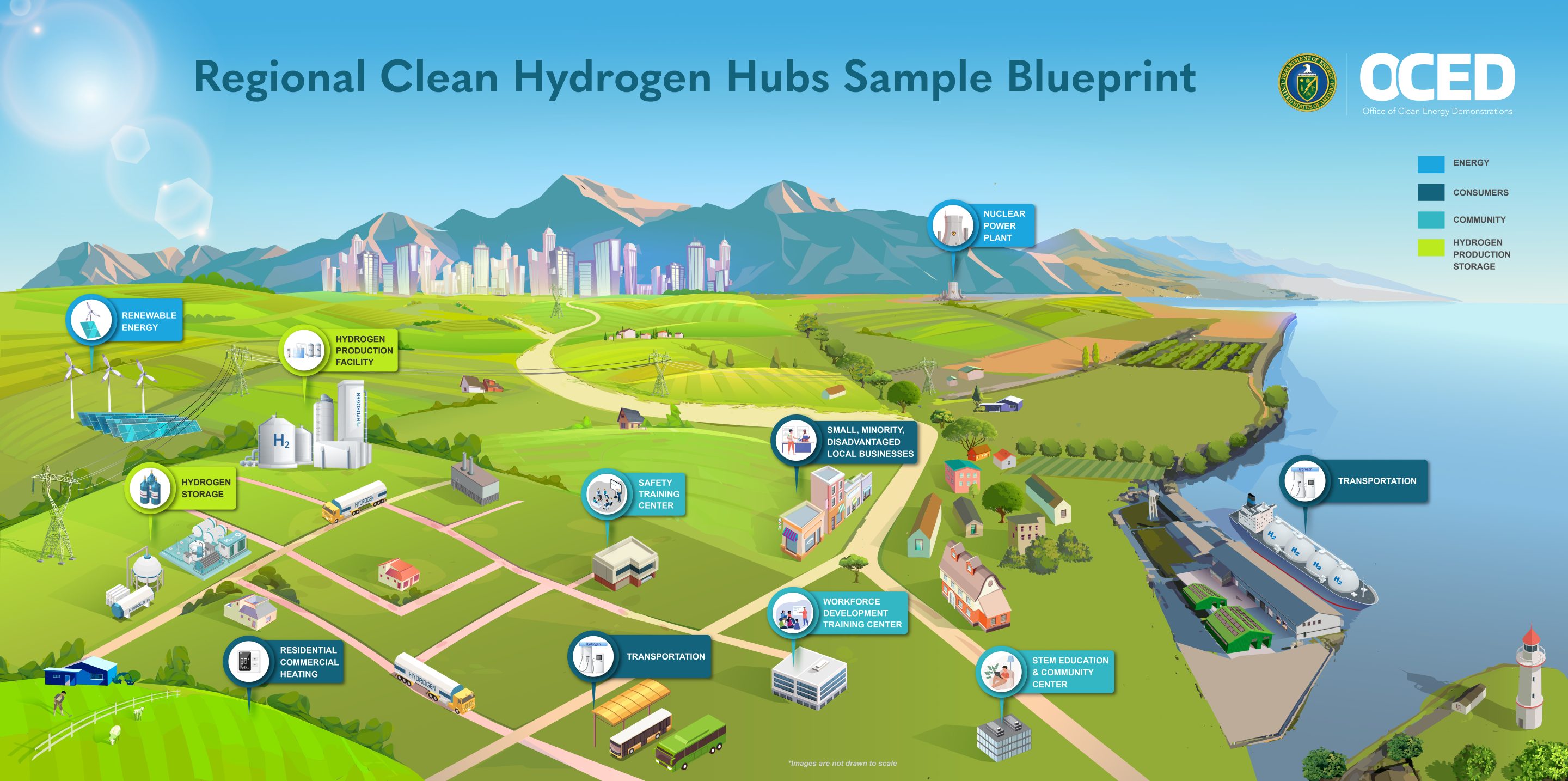
These two projects approach the production of hydrogen in two different ways. MACH2, which encompasses Pennsylvania, Delaware and New Jersey, embraces the production of green hydrogen, using renewable and nuclear electricity to split water molecules to extract hydrogen, producing no carbon emissions. The goal is to make hydrogen fuel more affordable and widely used so that it can help reduce carbon emissions from transportation, manufacturing and other industries.
ARCH2, which encompasses West Virginia, Ohio and Pennsylvania, will focus on blue hydrogen, using natural gas as the power source for its carbon capture and storage operation. It separates carbon dioxide emissions from other gases in industrial processes, like power plants or manufacturing facilities, and captures and permanently and safely stores the CO2 emissions deep underground in geological formations, such as porous rocks or man-made mines. The ARCH2 hub’s strategic location will decrease the cost of hydrogen distribution and storage, and the hub’s pipelines and fueling stations will make hydrogen more accessible and affordable.
Not only do the hydrogen hubs allow movement toward a cleaner energy and manufacturing future, but they bring the promise of job creation and economic growth. In addition to plans for MACH2 to work with labor unions and community colleges, it anticipates creating 20,800 direct jobs—14,400 in construction jobs and 6,400 permanent jobs. ARCH2 is expected to create more than 21,000 direct jobs—including more than 18,000 in construction and more than 3,000 permanent jobs.