We recently have witnessed unprecedented levels of activism — with Generation Z often leading the charge.
Gen Z is roughly defined as individuals born from 1995 to 2010. Its formative years have been marred by a world in disarray: social and political unrest, war, an economically unstable future and coming of age in the midst of a global pandemic.
Despite these challenges — maybe even because of them — this generation has championed a relentless call for change.
To better understand Gen Z’s unique role in the advocacy landscape, we created and distributed a survey to 70-plus 18- to 24-year-olds across the United States. Below are key insights into the results.
advocacy is not random or singular but personal and collective.
Social media is a powerful tool for change.
Being the digital natives they are, 91.8% of respondents find themselves on social media always or most of the time. And social media is where respondents overwhelmingly turn to stay up to date with current events.
Criticism notwithstanding, social media has a proven track record of being a powerful and accessible tool for change — from Arab Spring of the early 2010s to racial tensions in the United States.
The Black Lives Matter movement has demonstrated the power of social media to inspire action. Since its modest start as a hashtag in 2012, BLM has leveraged the internet to empower anyone to share relevant information and resources, and to organize. The result: BLM may have become the largest movement in our nation’s history. This showed in our survey results: When asked which campaigns respondents advocated for, BLM dominated.
With a preternaturally high level of online engagement to begin with, it’s important that effective digital campaigns harness the power of Zoomers to meet them where they are.
With a powerful message and tactful delivery, social media can become a vibrant ecosystem of information and resources, supercharging a movement.
But is it just slacktivism?
“Slacktivism,” or taking action online with little effort or commitment, is a popular critique of digital advocacy. According to a study by Pew Research, 76% of Americans say the statement “social media makes people think they are making a difference when they really aren’t” describes social media very or somewhat well.
After all, it’s easy to smash that subscribe button and move on with your life.
But our survey results show advocates intend on making a difference and are motivated to put in the effort. Here are the top four forms of advocacy based on our survey results.
- Sign a petition
- Donate money
- Email an elected official
- Attend a protest
Moreover, several respondents suggested they are most motivated when their impact is tangible and clear.
- “If I think it’ll change something, I’d take action”
- “Proof [that] what I’m doing is actually affecting something”
- “I have to know specifically where my money is going if I donate to a cause”
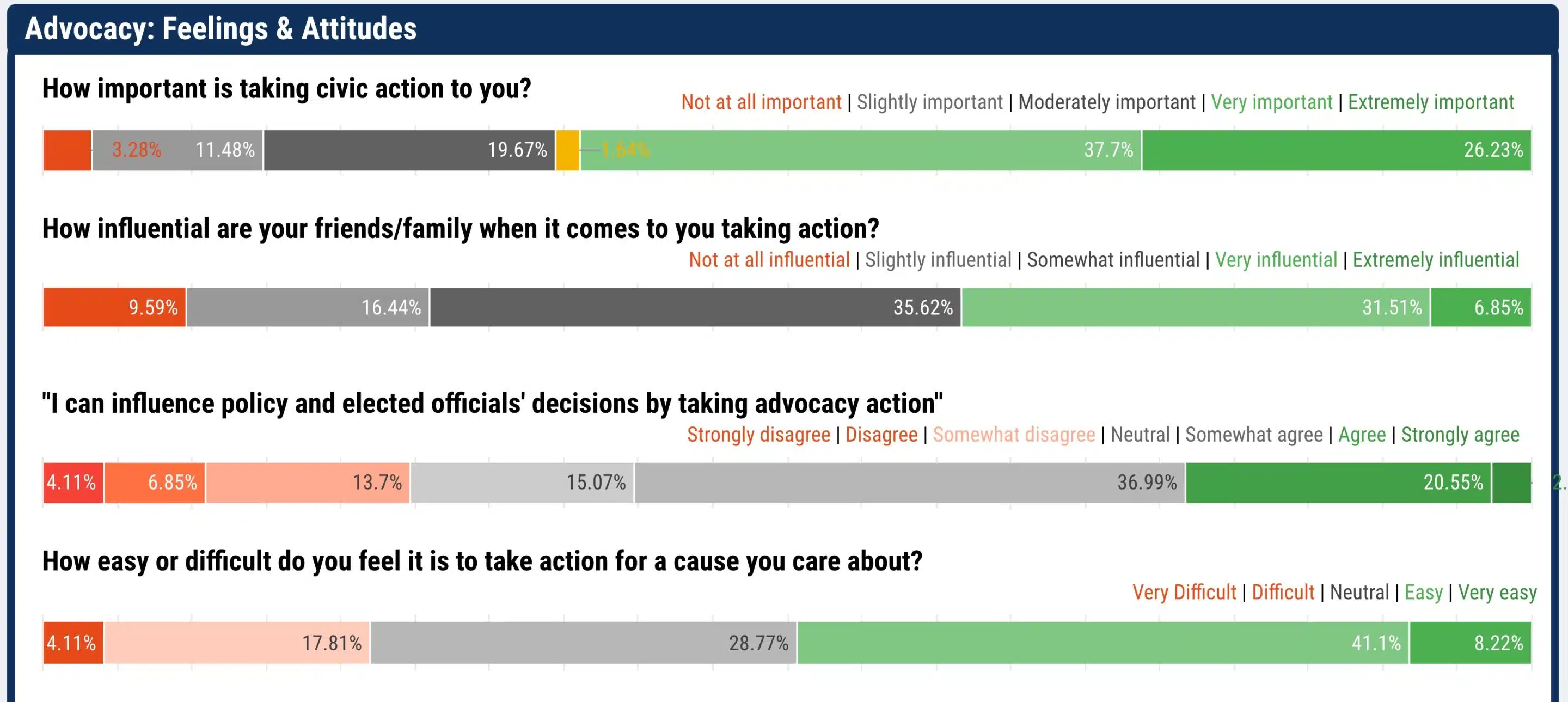
The majority of respondents (60.27%) believe they can influence policy and elected officials’ decisions by advocating for a cause.
Contrary to generational stereotypes — these advocates are prioritizing real change. Effective campaigns must recognize this and empower them to do so.
Advocacy is personal.
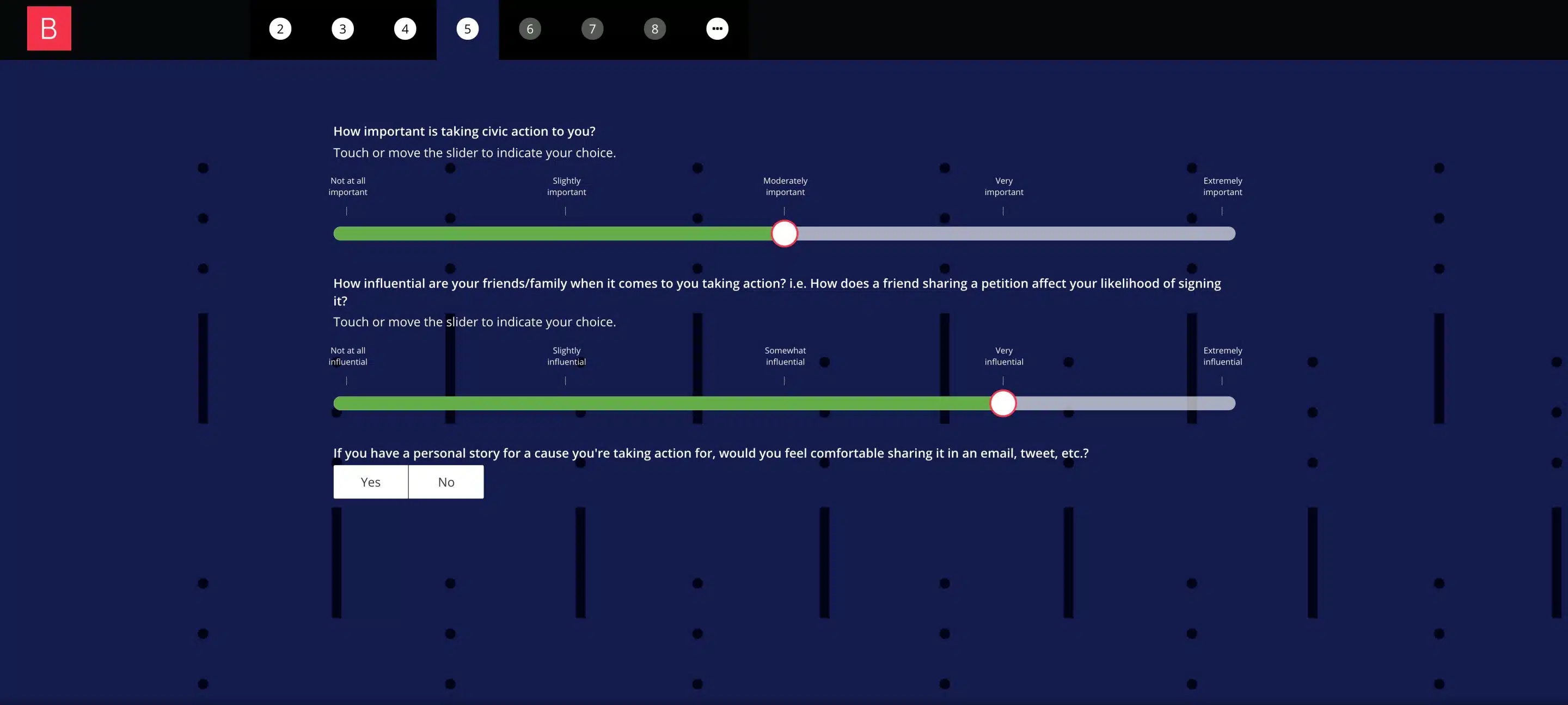
Respondents are more likely to advocate for a cause when it resonates with them personally. 74% of respondents to our survey are somewhat, very or extremely influenced by their friends and family when it comes to taking action.
Having a personal connection to a cause can be a deciding factor for an individual to speak up:
- “If it personally affects me or my family members”
- “It is easier for me to take action if I know that I will not be doing it alone. That is why I like to attend a protest, or volunteer with my friends if they are also interested”
- “Black Lives Matter – having friends who directly experience racism”
- “If others around me push me, I’ll do even more”
These sentiments suggest that advocacy is not random or singular but personal and collective. Gen Z innately understands something that many communicators must learn: Authenticity is everything.
A 21st century challenge
According to a study by OpenGov, decision-makers are most convinced by outreach that is meaningful, organic and personal. This sentiment, coupled with the proliferation of low-effort digital tools for advocate outreach, has made it increasingly difficult for legislative bodies to process the importance of digital communication.
This presents a challenge for Gen Zers who want their voices to be heard and legislators who need to be listening.
On one hand, advocates should prioritize impactful action, such as attending protests or personal outreach to legislators.
On the other hand, elected officials need to prioritize means of aggregating and making sense of online forms of communication, especially social media.
After all, speaking out for a cause through a digital medium doesn’t make it any less personal to the individual doing so.
This challenge won’t prevent Generation Z (and successive generations) from making their voices heard. As we know, in the face of adversity, this generation opts for action.
(To view the survey results in full, go here.)