How pairing creative and data puts our clients in the best position to win
Those of us who engaged in creative pursuits from a young age — for me it was writing; for my colleagues it ranges to anything from painting to photography to graphic design — we worked in pursuit of art. And we’re fortunate to work at a company where we can do art every day.
But the art we create isn’t art for art’s sake. Rather, it is created with purpose, executed to precision and analyzed to understand performance and how we can do better next time.
That sentence may cause artistic purists to shudder or yawn, but I’m here to say that creating art in this way is anything but boring. In fact, we leverage this pairing of creative and data in service of a big idea to create purpose-driven content.
We challenge the idea that people are either right-brained or left-brained (and a quick Google search shows me that science seems to agree). We need our team members to be analytically minded and creative. Yes, they have strengths and, yes, they may bring different talents to fruition in pursuit of the objective, but one does not obviate the other.
There’s something incredibly fulfilling about working on a creative project that means something. That helps people. That drives action. That does the job it sets out to do.
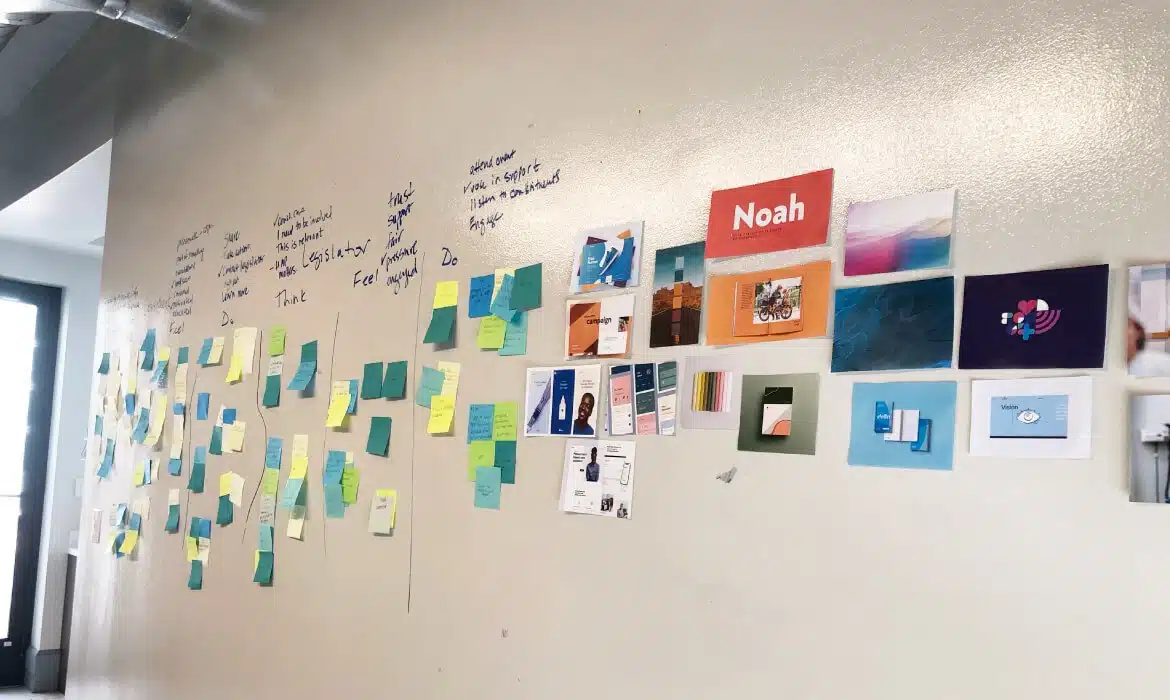
Here’s what we believe about how we work toward purpose-driven content:
- Creative ideas can come from anywhere. We did say anywhere. All team members, regardless of department; any client, regardless of their role in their organization. After all, when an idea is strong, we can all get behind it. The goal every day: good work that works.
- Context helps content matter more. Within our research and planning team, we spend a lot of time talking about the context of a particular challenge or situation. Content that is expressed with an understanding of the context in which it will exist is just better. And more effective. During the content explosion over the last several years, it’s become clear that it isn’t about quantity but about developing work that resonates within a bigger picture. This context can be the difference between someone engaging or passing your content by.
- It’s all part of the same system. If client goals pave the way and creative is the car that travels the road, I guess analytics are the road signs that tell us to stop, slow or drive faster. Maybe not the best metaphor in the world, but the fact remains that these things — goals, content, data — must exist in the same system. Without the others, things don’t function as seamlessly.
- Intuition plus information is the perfect pair. Any solid creative professional will extol the virtues of intuition in the creative process. And I agree. Intuition comes from an accumulation of real-life experiences, experiences many of us have in common. It is a powerful connection to our very humanness, and it helps us think bigger and deeper and more essentially about the work we create. Once that work is published, though, the analytics can point you in a direction and tell you what you need to know about how it’s getting along in the real world. And that sets you on a path to iterate and take more risks as a creative — why we got into this line of work in the first place.
There’s something incredibly fulfilling about working on a creative project that means something. That helps people. That drives action. That does the job it sets out to do. With solid grounding at the outset and clear objectives to direct the work, purpose-driven content is in a much better position to drive results. We know because the analytics show it.