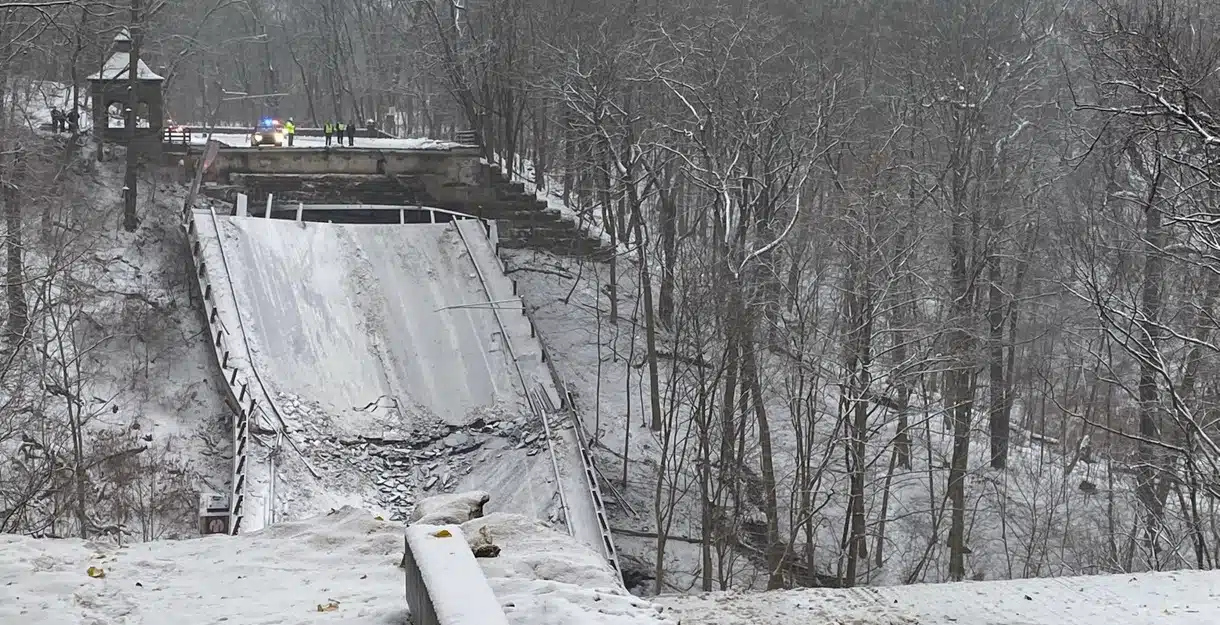
Pittsburgh bridge collapse underscores need for proactive infrastructure policy
The collapse of Pittsburgh’s Fern Hollow Bridge in Frick Park is a terrifying reminder of what we can expect to keep happening to our aging bridges unless and until policymakers replace our current Band-Aid approach to funding infrastructure with adequate, consistent revenue streams.
Fortunately, none of the drivers in the 14,000 cars and trucks that cross the bridge every day — or the hundreds of people who walk and jog along the bridge and through the park underneath, including me and my family — was killed. We know that was just luck. But, with Pennsylvania being home to 4,000 bridges, we also know the clock is ticking on proactive infrastructure policy.
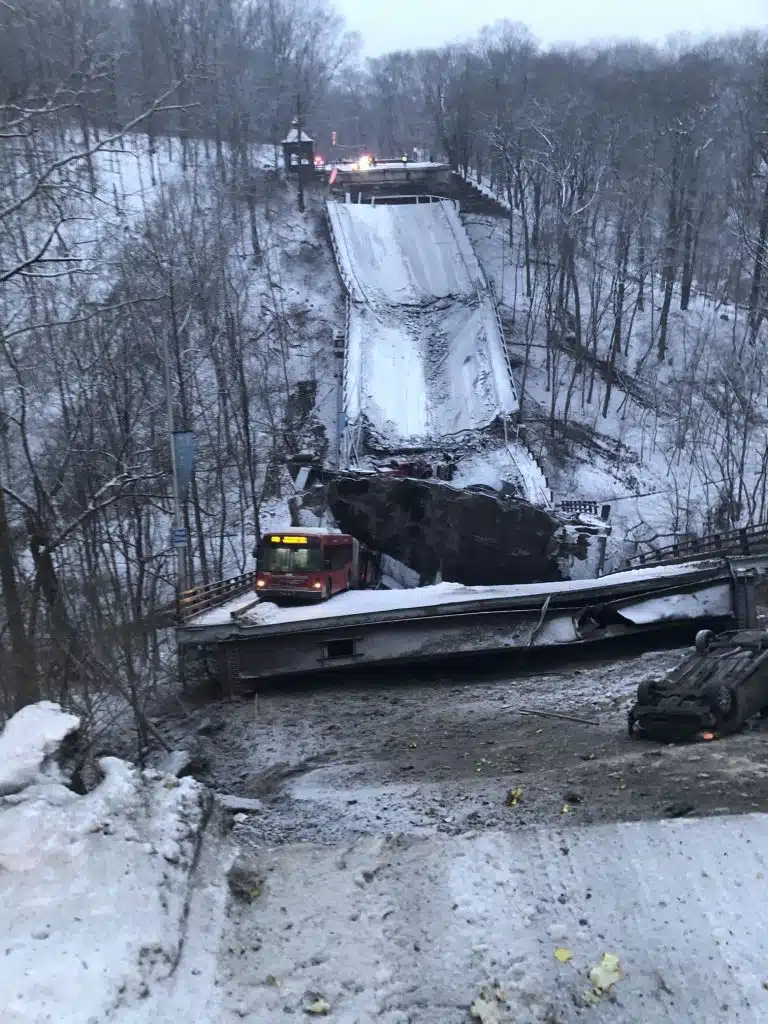
Photo: Pittsburgh Public Safety office via Twitter
We’ve got to fix these things because one of these days our luck’s going to run out
There was excitement across the commonwealth at the end of 2021, when more than $1.6 billion in the Infrastructure Investment and Jobs Act was earmarked for bridge replacement and repairs in the Keystone State. It is a welcome investment considering that Pennsylvania was named the 12th worst state when it comes to the condition and structural integrity of our bridges.
The Frick Park bridge has been listed in “poor” condition by the state Department of Transportation since 2011. It would have cost $1.5 million to repair the bridge, but that was never done — nor has work been completed on about 175 other bridges in Allegheny County with the same low rating. So, instead of a million in repairs, the federal government now will provide $25.3 million toward the cost of replacing the collapsed structure. That’s just for one bridge.
Part of the problem is that federal policy requires states to measure their infrastructure repair needs but doesn’t require them to fix any of the problems they find before they can build additional capacity for drivers.
And, if that’s not troubling enough, local money that could have been earmarked for bridge repair hasn’t made it into the repair budget. The Pennsylvania auditor general found that much of the state’s 57.6-cent fuel tax had been diverted to the state police to cover increased costs of patrolling communities that disbanded their police departments. During six years, that was $4.2 billion that could have helped to provide repairs to a lot of bridges.
And with the growing popularity of electric cars — which cause the same damage to roads as gas-powered automobiles — the burden of funding our road and bridge infrastructure must be shared fairly among the traveling public.
Pennsylvania isn’t the only state with failing bridges. Nationwide, about 46,000 of the country’s 617,000 bridges were in poor condition and another 291,000 were listed as fair. Dumping money into that abyss won’t solve the problem without serious policy reform.
The good people of Minnesota experienced the devastating consequences of this shortsightedness when the I-35 bridge collapsed in 2007, killing 13 and injuring 145.
As Allegheny County Executive Rich Fitzgerald told the Post-Gazette, “We’ve got to fix these things because one of these days our luck’s going to run out.”
Featured image courtesy of Pittsburgh Public Safety office via Twitter